I Learned to Leave Something of Myself Between the Notes
I had practised every passage and was waiting for applause. Instead, my teacher took my hands. That small gesture began to show me that I could respect a score without hiding behind its precision.
18 November 2026 · 4 min read
Hands at rest
I lifted my hands from the keyboard with a little more ceremony than necessary. I had finished my Clementi sonatina. The short notes had been crisp; the sound had grown and softened where the score required it. I felt I had delivered something complete and carefully arranged. I was waiting for my teacher to smile and applaud.
Instead, she took my hands in hers.
That touch interrupted the small celebration already happening inside me. She explained that a correct performance was not enough. Something was missing that I could not find simply by following the printed instructions. I had worked hard to reach this point. Discovering that accuracy was not the destination unsettled me.
Looking back, it is the hands I remember. The very hands I had trained to follow directions could also learn to tell something about me.
One note first
I was four when my mother enrolled me in piano lessons. At home, I listened to the melodies she played on our stereo. Facing those pale keys, I imagined I would soon be making the same music. There was the smooth surface beneath my fingers, and the possibility of producing a sound I had previously only received.
My first lesson was much smaller than my expectations.
There was no favourite piece waiting on the stand. There were beginner’s books, clefs to recognise, and a hand position to learn. First C, then another note. The journey moved in tiny steps while whole melodies were already playing in my head.
I kept going. I learned to read, repeat, and return to the same passage. Over the years, that patience became a skill I was proud of. I liked knowing what was required and being able to do it. When I finally received a complete classical piece, I followed every marking carefully. I thought being faithful to the music meant leaving myself out of it.
Inside the score
After that lesson, my question changed. It was no longer only whether I was playing the right notes. I began asking what I was bringing to them.
I thought about people, experiences, and images. Some memories were real; other scenes took shape as I played. I did not have to explain them to anyone or organise them into a polished account. They could remain private and still alter the way a musical phrase unfolded.
Beethoven made room for frustration. Chopin suited my more reflective moments. With Schubert, I could give joy its full expression. Technique did not disappear; I still needed it. But it was no longer the only thing receiving my attention.
Practice began to feel different. Before, I had measured it largely by what I could execute. Now there was pleasure in discovering a shade of meaning. A familiar passage could surprise me. The instrument had not changed, but there seemed to be more room at the same keyboard.
An open binder
In high school, I started playing for church services. The music director gave me a binder containing melodies written as numbers rather than notes on a staff.
I began experimenting with my own chords and harmonies around those simple lines. I wanted to make the music interesting for myself and for the congregation. The work that had kept my attention so closely on my fingers was becoming part of something shared.
I rarely played a song exactly the same way twice. Sometimes I kept the arrangement spare. Sometimes I made it more elaborate, allowing the accompaniment to take on a more classical character. The occasion and my mood influenced those choices. The melody remained recognisable. I did not need to replace it to contribute something of my own.
Improvising required care as well as feeling. I needed to understand the key and how the chords worked together. The foundations that had taken so long to learn now gave me choices.
What stayed
My formal lessons ended when I entered college, but their influence stayed. I carried forward the habit of studying and an appreciation for subtle differences. I also carried a less measurable permission: to take my own responses seriously.
I think about the child waiting to move on to the next note. She did not need to hurry. She needed time, a reliable foundation, and someone to show her that she could offer more than a correct performance. When I remember my hands resting in my teacher’s hands, I can still feel the kindness of that invitation.
Note: the story is inspired by a true story.
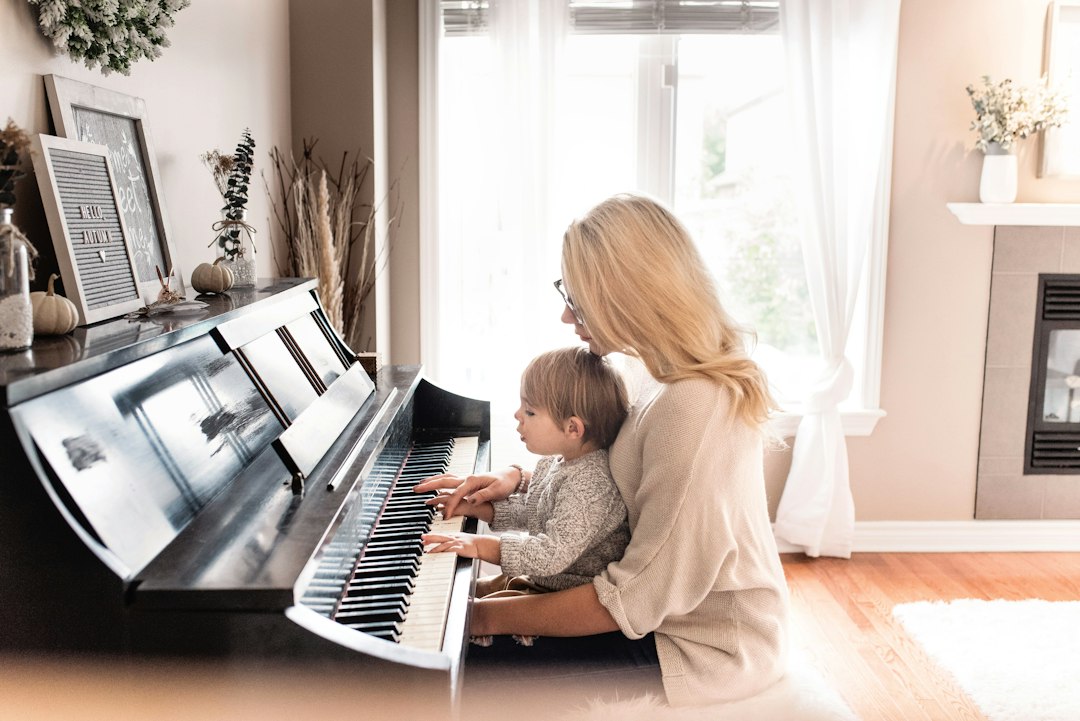
Illustrative photograph: Paige Cody / Unsplash (https://unsplash.com/photos/woman-and-child-playing-piano-7kck7rSl_Bo).
https://findred.org #HandsOnTheKeys #PianoLessons #PianoImprovisation #SharedMusic